Talent Management · Calibre Associates · Career Advice
What Does a Talent Manager Do? What the Role Actually Involves
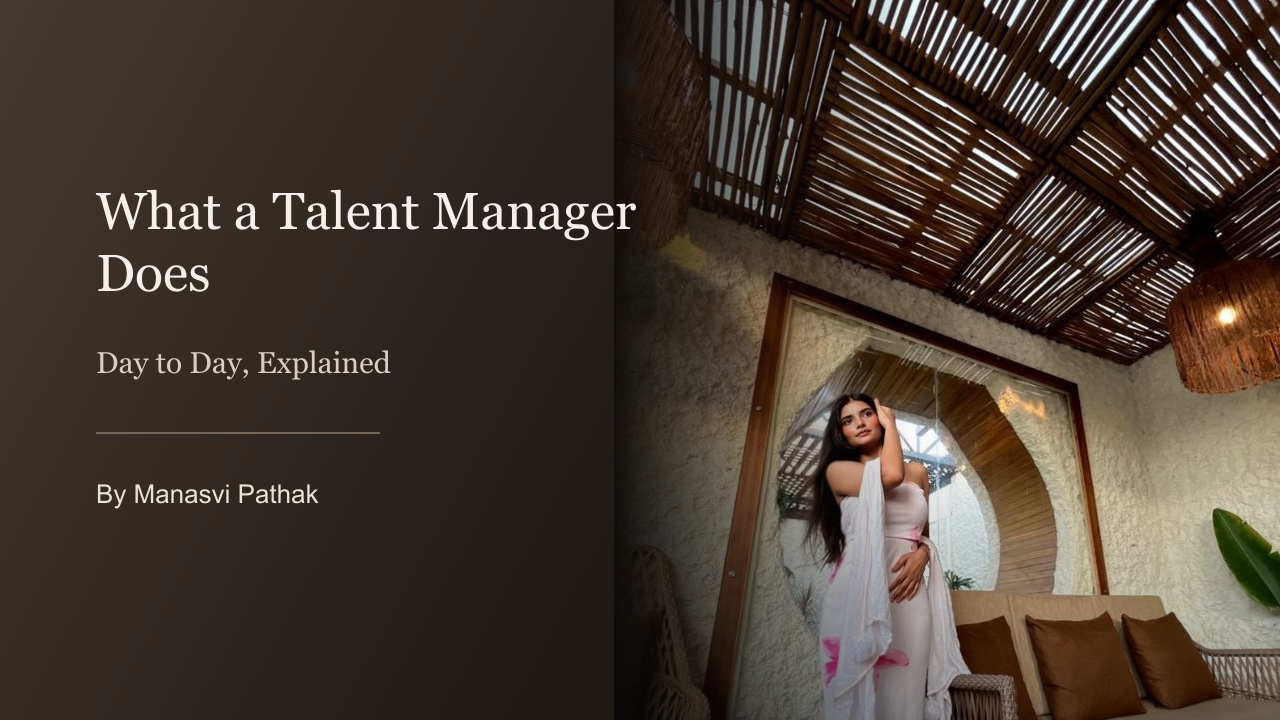
By Manasvi Pathak, actress, fashion model and UGC creator, Agra
Short answer
What does a talent manager do? They guide the career of creators, models and actors. They find and screen opportunities, talk to brands, shape the talent's positioning, coordinate the work and protect their time. They are usually paid a percentage of the deals they help close, agreed in writing and varying from deal to deal.
Key takeaways
- A talent manager looks after the whole career, not only the next booking.
- The daily work is mostly screening, communication, coordination and follow through.
- Commission is usually a percentage agreed in writing and it varies by deal, so ask for it in the contract.
- There is no single route in; experience with talent, brands and clear communication matters most.
What does a talent manager do? I get asked that more often than I expected. From the outside it can look like a mix of messaging, meetings and a lot of confident phone calls. The real job is quieter and more practical than that.
What does a talent manager do?
A talent manager looks after the career of a creator, model or actor, not just the next booking. That starts with understanding what the person is good at and where they want to go. From there the manager finds and screens opportunities, talks to brands, and advises on which jobs fit and which ones do not.
A large part of the work is communication and follow through. Briefs have to be read carefully, questions asked early, deliverables clarified and deadlines tracked. When something changes, someone has to say so clearly to both sides. A good manager also protects the talent's time and reputation by saying no to the wrong work.
What I do as a talent manager at Calibre Associates
I am Co Founder and Talent Manager at Calibre Associates, which offers talent management and creator partnership services. My work there is to identify and coordinate suitable talent for brand campaigns, manage partnerships from outreach through execution, and work with brands on campaign communication and content strategy.
I still act, model and create content myself, so I read briefs as someone who has been on the receiving end of them. I wrote about what I look for in what I look for when managing talent: fit before followers, the ability to take direction, and reliability. Those three decide more bookings than people think.
How does a talent manager get paid, and what percentage do they take?
The usual model is a commission, a percentage of what the talent earns on deals the manager helped bring or close. The exact share is not fixed. It varies by deal, by manager and by how much work the manager is doing, so I will not point to a number.
What matters is that it is agreed in writing. As a creator or model, ask for the percentage, what it applies to and for how long in the contract. Ask whether it covers only new deals or also deals you already had. A legitimate manager earns from your jobs, not from an upfront fee to join a roster, which I also explain in should you sign with a talent agency.
How to become a talent manager
There is no single qualification that decides it. Most people get there through experience. Learn how briefs, usage rights and contracts work. Spend time around real shoots and campaigns so you know what a good job and a bad job look like. Build relationships with brands and with the people who create for them.
Then start small. Look after a few people properly instead of promising everything to many. Be organised, be honest about what you can and cannot get, and keep every agreement in writing. Trust is the real product, and it takes time to build. You can find me on LinkedIn.
Communication habits matter as much as contacts. Reply on time, summarise calls in a message so nothing is misremembered, and tell talent early if a brand goes quiet or changes the scope.
What a talent manager does not do
A manager does not make a career out of nothing. They cannot turn a weak portfolio into a strong one by sending emails, and they cannot promise a particular result. What they can do is save you time, spot a bad offer early and make sure the right people see your work.
A manager also does not replace your own judgement. You still decide what you are comfortable doing on camera, what you will post and which brands you want to be linked with. A good manager gives you the information to decide well and then respects the decision.
When do you actually need a talent manager?
You need one when the admin and negotiation start to take time away from the work, or when you do not know how to judge an offer. If you are just starting and have little to show, a small portfolio will do more for you than a manager. A manager can only represent something that exists.
If you want to see how this works across a country and not only one city, read about talent management in India, or the local view in talent management agency in Agra. Compare the roles in talent manager vs agent vs agency in India, and ask how a manager works before you sign anything. The talent management guide collects all of it.
Frequently asked questions
What does a talent manager do?
A talent manager looks after the career of a creator, model or actor. That includes finding and screening opportunities, speaking to brands, advising on positioning, coordinating schedules and deliverables, and keeping both sides clear about what was agreed.
What percentage does a talent manager take?
It is usually a percentage of what the talent earns from deals the manager helped bring or close. The exact share varies by deal and by manager, so ask for it in writing in the contract before you agree to anything.
How do you become a talent manager?
Most people get there through experience rather than one qualification. Learn how briefs, contracts and campaigns work, build relationships with brands and creators, start by looking after a small number of people well, and stay organised and honest.
Do I need a talent manager as a new creator?
Not always. If you have little work to show yet, build a small portfolio first. A manager can only represent something real, and a legitimate one earns from your jobs, not from an upfront fee.