Fashion Modeling · Editorial · Behind the Scenes
What Actually Happens on a Fashion Editorial Shoot
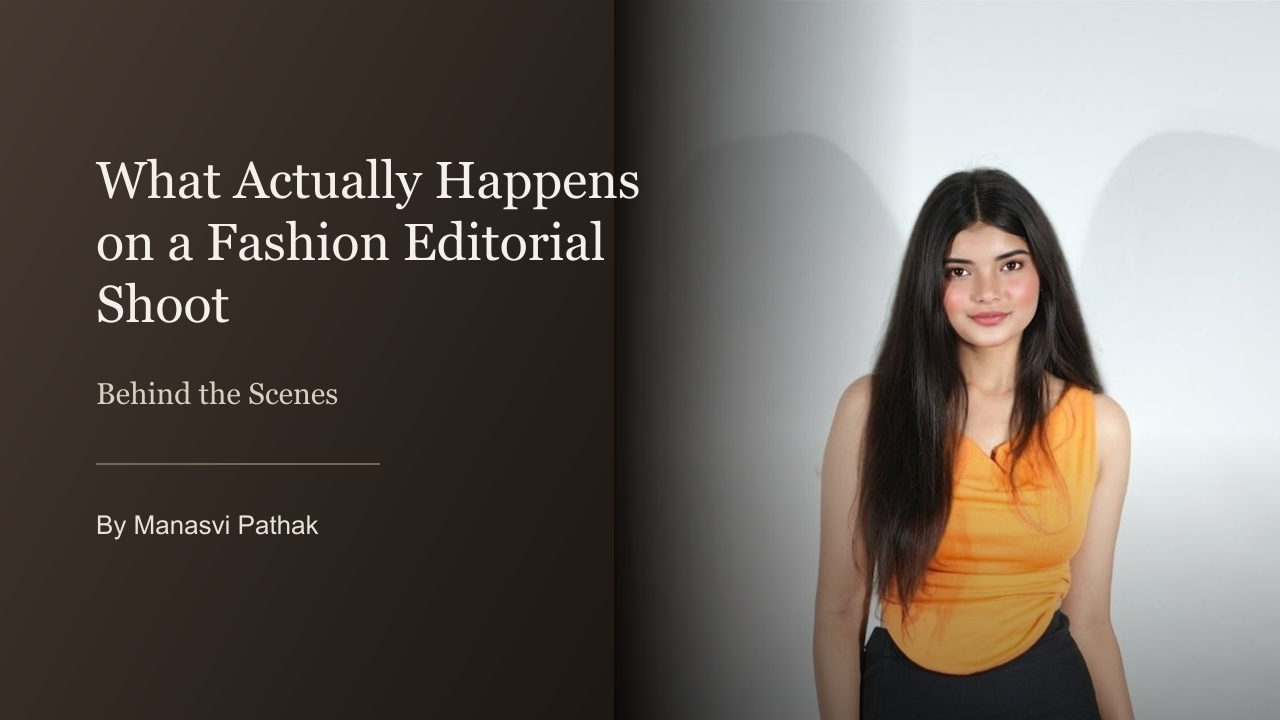
People tend to picture a fashion shoot as glamorous from the first minute to the last. A few hours in front of a camera, a few outfit changes, done. Having worked editorial shoots for a while now, I can say the picture is a little more layered than that, and I think the gap between the expectation and the reality is worth talking about.
The morning is slower than anyone expects
A shoot day rarely starts with a camera. It starts with hair, makeup, and wardrobe, and depending on the concept, that can easily take two to three hours before a single frame is taken. For heavier looks, especially bridal and traditional editorial work like the shoots I have done for Kapda Mandir, the prep alone can run long. Draping, pinning, checking how the fabric catches the light. None of that shows up in the final image, but all of it decides whether the final image works.
A single look can take longer than people assume
One outfit change does not mean five minutes of shooting. Heavy garments need adjusting between almost every set of frames. Jewellery shifts. Drapes fall differently when you move. A dupatta that looked perfect standing still can look completely wrong mid motion. So a lot of the actual shoot time is small corrections, not new poses. Patience matters here more than people think, both from the model and from the whole team around her.
Direction changes more than you would guess
A good photographer rarely just says smile or look here. Direction on an editorial set is constant and specific. Chin down a little. Weight on the back foot. Let your shoulder drop. Hold that expression two seconds longer. Taking that kind of direction while still keeping your movement natural and not stiff is a skill on its own, and it is honestly one of the things that separates a photo that feels alive from one that feels posed.
What actually makes a photo work
After enough shoots, I have noticed the images that end up being everyone's favorite are rarely the technically perfect ones. They are the frames where something real slipped through, a genuine half smile, a moment of actually enjoying the outfit, a natural shift in weight. Comfort under heavy embroidery, long holds, and repeated setup changes is what allows that realness to come through instead of exhaustion.
None of this is a complaint. It is genuinely one of my favorite parts of modeling, the slow build toward a handful of frames that actually land. If you are a brand thinking about an editorial or campaign shoot and want to know what the day actually looks like from the talent side, my portfolio has examples of finished work, and my services page covers how a collaboration like this comes together.
Written by Manasvi Pathak, Agra